
Introduction
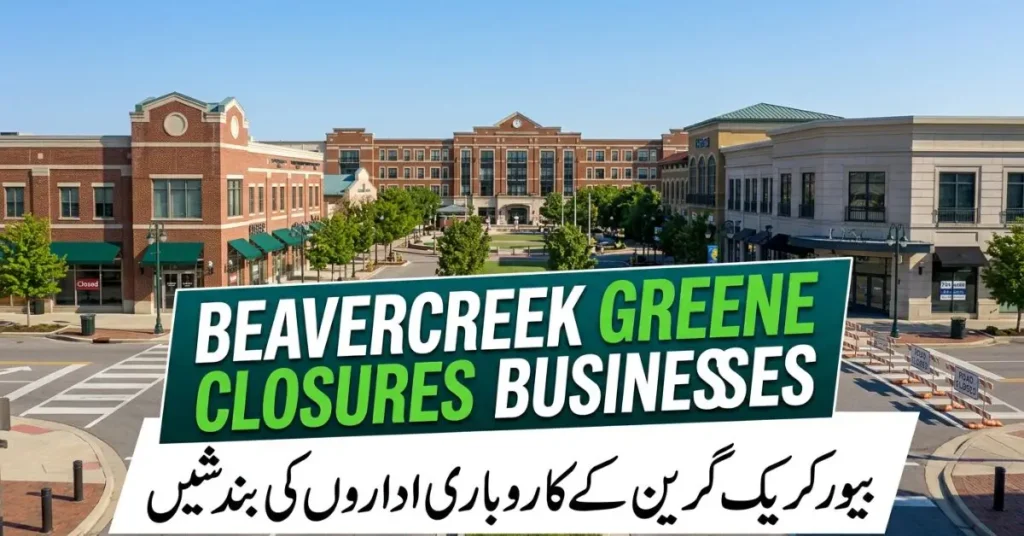
If you’ve visited The Greene Town Center in Beavercreek, Ohio recently, you may have noticed more empty storefronts than usual. Restaurants that were once packed on weekends are now dark. Retail shops that drew steady crowds have quietly locked their doors.
You’re not imagining it. Closures have been happening at The Greene and locals want to know what’s going on.
This article gives you a clear, honest look at the Beavercreek Greene closures businesses that have taken place, the reasons behind them, and what it might mean for the future of this popular shopping and dining destination.
What Are the Beavercreek Greene Closures Businesses?
The Beavercreek Greene closures refer to the permanent shutdowns of various retail stores, restaurants, and service businesses located at The Greene Town Center in Beavercreek, Ohio. These closures reflect a combination of national retail contraction, post-pandemic economic shifts, rising operational costs, and changing consumer shopping habits. Some spaces have been replaced; others remain vacant.
Quick Summary
Several businesses at The Greene Town Center in Beavercreek, Ohio have closed in recent years. The causes include national chain collapses, rising rent, and shifting consumer behavior. Some closures are permanent; a few spaces are being redeveloped or filled by new tenants.
What Is The Greene Town Center?
Before diving into closures, it helps to understand what The Greene is.
The Greene Town Center is an open-air lifestyle shopping center located in Beavercreek, Ohio — a suburb of Dayton. It opened in 2006 and quickly became one of the most popular retail and dining destinations in the Miami Valley region.
It was designed to feel like a walkable small town, with outdoor streets lined by shops, restaurants, a movie theater, and residential units. At its peak, it attracted national brands, local restaurants, and consistent foot traffic from across Greene County and the wider Dayton metro area.
That made it a strong draw — but also vulnerable when national retail trends shifted.
Why Are Businesses Closing at The Greene?
The closures at Beavercreek Greene don’t have a single cause. They’re the result of several overlapping pressures.
National Chain Collapses
Many of the closures at The Greene are part of larger national stories. When a major retail or restaurant chain files for bankruptcy or announces mass closures, individual locations — including those at lifestyle centers like The Greene — get shut down regardless of local performance.
This has been a consistent pattern across the US since 2020. Chains that struggled during the pandemic continued to downsize even as conditions improved.
Rising Operating Costs
Rent, labor, and supply chain costs increased significantly post-pandemic. For restaurants especially, thin profit margins made it hard to stay open even with decent customer traffic. A location that was marginally profitable in 2019 became unsustainable by 2022 or 2023.
Changing Consumer Habits
More people shop online now than ever before. That hits mid-range retail stores hardest — the kind that once filled lifestyle centers like The Greene. When consumers buy clothing, home goods, and electronics online, physical stores lose the volume they need to cover costs.
Local Competition and Market Saturation
The Dayton area has multiple shopping options. With nearby malls, strip centers, and growing online retail, The Greene faces real competition for both shoppers and tenants.
Businesses That Have Closed at The Greene Beavercreek
Below is a look at notable closures that have occurred at The Greene Town Center. Some are confirmed permanent closures; others were part of larger chain-wide shutdowns.
Restaurants and Food
- Bravo! Italian Kitchen — A popular sit-down Italian restaurant that was a longtime anchor dining option at The Greene. It closed as part of broader struggles in the casual dining sector. Bravo! locations across the US have been shutting down in waves since the pandemic.
- J. Alexander’s — A well-regarded American grill that operated at The Greene for years before closing. The parent company went through ownership changes and location cuts, affecting several Ohio properties.
- Bonefish Grill — Part of the Bloomin’ Brands family. Some Ohio locations were affected by consolidation decisions made at the corporate level.
- Several fast-casual and independent food concepts — The Greene’s food court and pad restaurant spaces have seen turnover from smaller operators who couldn’t sustain the post-pandemic cost environment.
Retail Stores
- Pier 1 Imports — Closed nationwide in 2020 after filing for bankruptcy. The Greene location was among thousands that shut permanently.
- Charming Charlie — A fashion accessories chain that went through two bankruptcy filings and ultimately closed all locations, including its presence at The Greene.
- Destination XL / casual apparel concepts — Specialty apparel stores have been among the hardest hit by online retail competition, and several left The Greene over the past few years.
- Bath & Body Works and Victoria’s Secret — While both brands still operate in many markets, format changes and lease decisions have affected some lifestyle center locations nationally.
Entertainment and Services
- AMC Theatres (The Greene 14) — The movie theater at The Greene faced serious pressure during and after the pandemic. AMC as a national chain survived bankruptcy concerns, but individual locations in smaller markets faced extended uncertainty and reduced shopper traffic.
Note: This list reflects publicly reported closures and widely known national chain shutdowns. For the most current and confirmed status of specific businesses, checking The Greene’s official website or local Dayton-area news sources is recommended.
A Timeline of Closures
| Year | Notable Closures |
|---|---|
| 2020 | Pier 1 Imports, Charming Charlie (bankruptcy closures) |
| 2021 | Several casual dining reductions, theater capacity limits |
| 2022 | J. Alexander’s, continued restaurant turnover |
| 2023 | Bravo! Italian Kitchen, additional retail vacancies |
| 2024–2025 | Ongoing redevelopment; some spaces refilled, others still vacant |
What’s Replacing the Closed Businesses?
Not all the news is negative. The Greene’s management has been working to backfill vacant spaces, though the pace has been slower than many locals would like.
Some trends in replacement tenants include:
Health and wellness concepts — Gyms, med spas, and wellness-focused businesses have moved into spaces previously held by retail stores. This reflects a national trend of lifestyle centers shifting toward experience-based tenants.
Local and regional restaurants — National chain restaurants have been replaced in some cases by local operators who can build loyal followings and adapt faster to market changes.
Service businesses — Nail salons, optical shops, and similar service-based tenants have taken over some retail spaces. They’re less vulnerable to online competition and tend to generate consistent foot traffic.
Residential and mixed-use expansion — The Greene has continued to develop its residential component. More apartments and mixed-use space help maintain foot traffic even as retail shrinks.
What This Means for Beavercreek Shoppers and the Local Economy
For residents of Beavercreek and surrounding Greene County communities, the closures are more than just inconvenient — they represent real economic impact.
Local jobs are lost when restaurants and stores close. Tax revenue that supported city services decreases. And the social value of a gathering place — somewhere people go to eat, shop, and spend time — diminishes when too many storefronts sit empty.
That said, The Greene is not a dying property. It still draws significant foot traffic, retains strong anchor tenants, and has a management team actively working to fill vacancies. The lifestyle center model is evolving, not disappearing.
The businesses that will thrive at The Greene going forward are likely to be experience-driven — restaurants, entertainment, fitness, and services that can’t easily be replaced by a website.
What Should Local Business Owners Know?
If you’re a local entrepreneur thinking about opening at The Greene, the current environment has two sides.
On one hand, vacancy rates mean more negotiating power on lease terms. Some spaces that were previously unavailable are now open potentially at more favorable rates than a few years ago.
On the other hand, foot traffic at lifestyle centers has changed. You need a concept that draws people specifically to your business, not one that relies entirely on passing shoppers.
Food, entertainment, fitness, and specialty services tend to perform better in this environment than traditional retail.
Conclusion
The recent closures at Beavercreek Greene show how much retail and dining have changed in the past few years. Rising costs, online shopping, and national chain cutbacks have all played a role. Still, The Greene is not shutting down. It remains an active shopping and lifestyle center that is adjusting to new market demands.
For local shoppers, that means some familiar names are gone, but new businesses may take their place. For business owners, it highlights the need for strong concepts that offer something people cannot get online. The Greene is changing but it is still an important part of Beavercreek’s local business scene.
Frequently Asked Questions
What businesses have closed at Beavercreek Greene?
Notable closures include Bravo! Italian Kitchen, J. Alexander’s, Pier 1 Imports, and Charming Charlie. Most are tied to national chain bankruptcies or post-pandemic restructuring — not local issues specifically. Check Dayton Daily News for the most current updates.
Why are so many businesses closing at The Greene?
It’s a national trend — rising labor costs, online shopping growth, and chain-wide bankruptcies have hit lifestyle centers across the US. Local competition from other Dayton-area shopping destinations has added extra pressure.
Is The Greene Town Center closing permanently?
No. The Greene is still open and operating. Management is actively filling vacant spaces. It remains one of the busier retail destinations in the Dayton metro area, with new tenants coming in focused on dining, wellness, and services.
What is replacing the closed businesses?
Local restaurants, health and wellness concepts, and service-based businesses are filling some vacant spots. The Greene is moving toward an experience-focused model — similar to lifestyle centers nationwide adapting to declining traditional retail foot traffic.
When did closures at Beavercreek Greene start increasing?
Closures picked up significantly from 2020 onward due to the pandemic. The trend continued through 2022–2023 as costs rose. Some spaces have been refilled, but others remain vacant as of 2026.