
Introduction
Every day, people lose track of things that matter. A deadline slips by. An important email gets buried. A follow-up task falls through the cracks. It is not laziness. It is the reality of managing more information than any human brain was designed to handle.
That is the problem this kind of technology was built to solve.
In this guide, you will learn exactly what findremind is, how it works in practice, where it fits inside the broader technology space, and how you can start using it in a way that actually makes a difference.
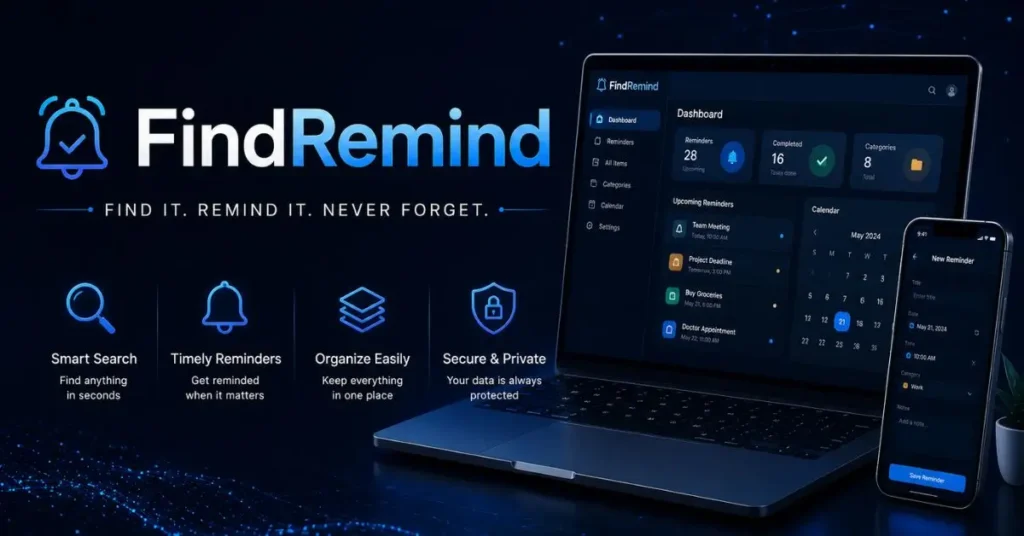
Findremind is a smart reminder and retrieval system that helps users locate important information and act on it at the right time. It goes beyond basic alerts by combining intelligent search with context-aware notifications, so nothing important gets lost or forgotten.
Quick Summary
This tool blends smart search with timely alerts to help people stay on top of tasks, deadlines, and saved information without depending on memory alone.
Why Staying on Top of Things Has Gotten Harder
This is not just a personal productivity problem. It is a structural one.
The average professional today receives hundreds of messages, notifications, and updates every single week. Research from the American Psychological Association has linked this kind of constant digital input to cognitive overload, a state where the brain simply cannot process and retain everything it is receiving.
Traditional reminder apps were a step in the right direction. But they were passive. You had to remember to set the reminder in the first place. If you forgot, or if the alert fired at the wrong moment, the information was gone again.
Modern smart reminder technology was designed to fix exactly that.
How This Technology Actually Works
The core idea is simple even if the technology behind it is not.
Most basic tools alert you at a fixed time. You set it, it fires, you either act or you do not. There is no intelligence involved. There is no ability to surface related information or adjust based on what you actually need.
A smarter system like this works differently. It connects the act of saving information with the act of being reminded about it. When you save something, the system indexes it. When the right moment arrives, it surfaces that information alongside the alert.
Think of it like this. You save a vendor quote in a shared workspace. Three weeks later, when your budget planning cycle starts, the system brings it back up automatically. You did not have to search for it. You did not have to remember it. It was just there when you needed it.
The technology typically combines:
- Automated indexing that organizes information as it comes in
- Context-aware triggers based on time, behavior, or location
- Integrated search that pulls relevant content at the right moment
- Cross-device syncing so your alerts follow you wherever you are
A Real-World Example From the US
Picture a marketing manager in Austin, Texas, juggling four client campaigns at once.
She gets dozens of emails a day. Some contain deadlines. Some contain approvals. Some contain feedback she will need to reference in three weeks. There is no way to manually track all of it.
With a smart reminder and retrieval setup, she tags important messages as they arrive. The system does the rest. A client deadline from last month reappears two weeks before it is due. A creative brief she saved resurfaces right before the strategy meeting. A budget figure she noted pops back up when the monthly report is due.
She is not working harder. She is just working with better support.
Where It Fits Inside Modern Technology
This kind of tool sits at the crossroads of several fast-growing areas in tech:
Productivity Software
Apps like Notion, Todoist, and Microsoft To Do have made task management mainstream. Smart reminder systems build on top of that foundation by adding retrieval intelligence.
Artificial Intelligence
Machine learning is increasingly being used to predict when you will need certain information based on your past behavior. The more you use the system, the more accurately it can anticipate your needs.
Personal Knowledge Management
This is the practice of deliberately capturing and organizing information for future use. The problem most people face is not capturing. It is retrieving. Smart alert systems solve the second half of that problem.
Workflow Automation
Connected with tools like Zapier or native integrations, a reminder trigger can do more than notify you. It can update a record, send a follow-up email, or kick off an entire workflow automatically.
The Real Benefits People Experience
Here is what people consistently report after using this kind of system properly:
Less mental strain
When you trust a system to surface what you need, you stop trying to hold everything in your head. That mental space goes toward actual thinking and decision-making instead.
Better follow-through
Research consistently shows that tasks with specific, timely reminders attached to them are far more likely to get done. Automated retrieval makes that follow-through happen without extra effort.
Time saved on searching
One of the biggest hidden time drains in any workplace is searching for information you already have but cannot find. A system that brings information to you rather than making you hunt for it eliminates that problem.
Better team accountability
When shared across a team, smart reminder systems reduce the chance of dropped tasks. Everyone sees what is due, what is pending, and what needs attention, without someone having to chase it manually.
Limitations Worth Knowing
Being honest here matters.
No system works well if it is not fed good data. If you do not save, tag, or input information consistently, there is nothing useful to retrieve later. The early habit-building phase requires some discipline.
Privacy is also a serious consideration. Any platform that stores your tasks, notes, and personal data needs to handle that information responsibly. Always review the privacy policy and data security practices before committing to a tool.
And finally, this kind of technology helps you remember and retrieve. It does not tell you what decision to make. Human judgment is still very much part of the equation.
Basic vs. Smart Reminder Tools: A Simple Comparison
| Feature | Basic Reminder Apps | Smart Reminder Systems |
|---|---|---|
| Time-based alerts | Yes | Yes |
| Information retrieval | No | Yes |
| Context-aware triggers | No | Yes |
| Cross-device sync | Sometimes | Usually yes |
| Team collaboration | Rarely | Often supported |
| AI-powered suggestions | No | Increasingly yes |
If you are managing a handful of simple personal tasks, a basic app is probably enough. But if you are dealing with large amounts of information across multiple projects or people, the smarter approach offers a clear advantage.
How to Start Using It Without Feeling Overwhelmed
Getting started does not have to be complicated. Here is a practical approach:
Pick one area first. Do not try to overhaul everything at once. Start with work deadlines or recurring tasks where the benefit will be immediately obvious.
Build a simple tagging habit. When you save something important, add a tag or category. This is the foundation that makes smart retrieval possible later.
Do a weekly review. Spend ten minutes each week looking at what is coming up. This keeps you in the loop rather than purely reactive.
Expand slowly. Once the system feels natural in one area, add another. Most people find that once they experience the value, expanding becomes effortless.
Conclusion
Findremind is not just another productivity buzzword. It is a practical response to a real problem that more people are facing every day: too much information, too little bandwidth to manage it all.
By combining smart search with timely, context-aware alerts, it closes the gap between storing information and actually using it. Whether you are a student, a freelancer, or managing a team, there is a version of this approach that can make a genuine difference in how you work.
The best time to start building a smarter reminder system is always now. Start small, stay consistent, and let the system do the heavy lifting.
Frequently Asked Questions
What is findremind and what does it do?
Findremind is a smart reminder system that combines automated alerts with intelligent search and retrieval. It surfaces the right information at the right moment so you can act on it, not just be notified about it.
How is it different from a regular reminder app?
A basic reminder app alerts you at a set time and stops there. This goes further by connecting your saved information directly to the alert. When the notification fires, the relevant content is already in front of you.
Is it useful for teams or just individuals?
Both. Individuals get better follow-through and less mental strain. Teams get shared accountability and fewer dropped tasks. Many collaboration platforms now include these features as standard.
Does it use artificial intelligence?
Many platforms do. AI helps predict when you will need certain information and personalizes alerts over time. The level of AI involvement varies by tool, but the industry is clearly moving in that direction.
Is my data safe?
It depends on the platform. Look for end-to-end encryption, clear data retention policies, and transparent privacy practices. Always read the privacy policy before storing personal or work information in any tool.
Does it work offline?
Some tools allow you to view already-synced reminders offline. But features like cross-device sync and AI suggestions usually need an internet connection. Check the tool’s documentation if offline access matters to you.