
House Decoration Advice: Practical Tips That Work
Most homes could look significantly better with the right changes. The problem is not usually budget or access to good products. It is knowing which changes actually make a difference versus which ones look appealing on a design blog but fall flat in a real living space.
Decoration decisions made without a clear framework tend to produce rooms that feel incomplete. Individual pieces might be attractive, but without understanding how light, scale, color, and texture work together, even expensive items can make a room feel disconnected rather than designed.
This guide covers house decoration advice mintpaldecor principles that produce real results. The foundational concepts that make decoration work, room-by-room specific guidance, honest budget context, and the mistakes that most commonly undermine otherwise solid decoration efforts.
What Is House Decoration Advice?
House decoration advice mintpaldecor refers to practical guidance on improving a home’s appearance and atmosphere through intentional choices about color, furniture arrangement, lighting, textiles, and accessories. Good house decoration advice focuses on understanding why certain changes produce visual improvement rather than just what to buy, helping homeowners make decisions that work within their actual space, budget, and lifestyle rather than replicating magazine images that may not translate to their specific home.
Quick Summary
Effective house decoration follows clear principles. Start with a neutral base, layer in warmth through textiles and lighting, choose a focal point for each room, use correct furniture scale, and hang curtains high and wide. This guide covers these principles with room-specific examples and honest US budget context throughout.
The Principles That Make Decoration Work
Before looking at specific rooms or purchasing specific pieces, understanding the principles behind successful decoration produces better decisions at every level.
Every room needs one clear focal point
A focal point is the visual anchor that draws attention when you enter a room. In a living room it might be a fireplace, a large piece of artwork, or a statement sofa. In a bedroom it is almost always the bed. In a dining room it is the table.
Every decoration decision in a room should support or complement that focal point rather than compete with it. When multiple elements compete for visual attention equally, rooms feel restless and unresolved regardless of the quality of individual pieces.
Scale matters more than most people realize
The most common decoration mistake in US homes is choosing furniture and accessories that are too small for the space. A sofa that fits through the front door easily is not necessarily the right sofa for a large living room. An area rug that floats in the middle of a seating arrangement without touching any furniture looks like it was placed accidentally.
Measure your spaces before shopping. Understand the footprint you need to fill. Furniture that is correctly scaled to a room makes the space feel intentional. Furniture that is too small makes rooms feel empty and staged.
Neutral base, warm layers
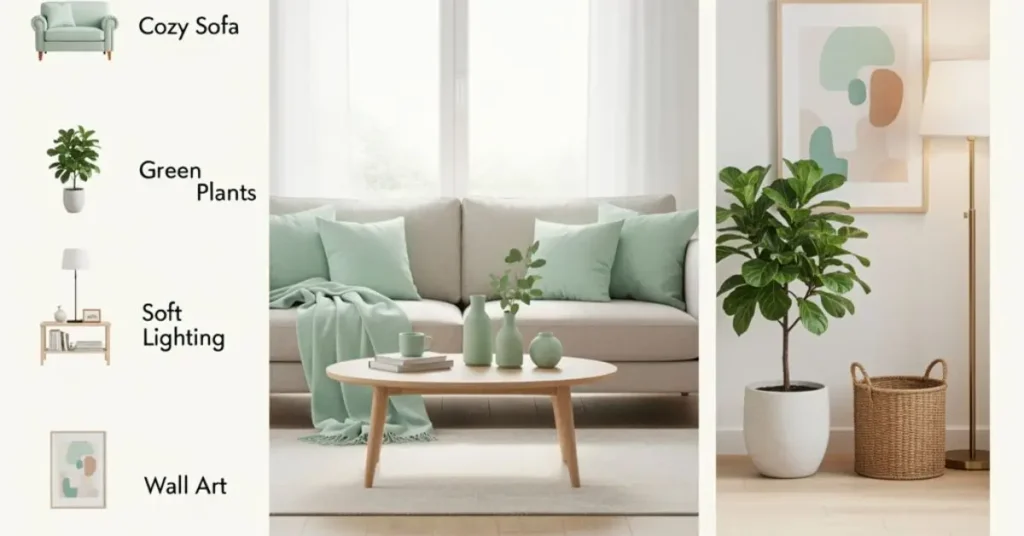
The most enduring decoration approach uses neutral colors as the structural foundation and introduces warmth through layers. Walls, large furniture pieces, and flooring in warm whites, creams, greiges, or light grays provide a flexible backdrop. Textiles, wood tones, plants, and carefully chosen accessories introduce color, texture, and personality.
This approach ages well because the foundational elements remain relevant as tastes change and accessories can be updated without requiring structural changes to the room.
Lighting is a decoration element, not just a functional one
Most rooms in US homes are lit with a single overhead fixture that provides adequate light but creates flat, unflattering illumination that makes decoration look less appealing than it could.
Layered lighting, combining overhead, floor, and table sources at varying heights, creates depth and warmth that make every other decoration element look better. This is house decoration advice mintpaldecor guidance that delivers more visual improvement per dollar than almost any other change available.
Living Room Decoration
The living room is where decoration has the highest impact on how the entire home feels. Visitors and residents spend more time here than anywhere else, and the impression it creates sets the tone for the whole house.
Area rug first
Define the seating area with an area rug before making any other decisions. The rug should be large enough that the front legs of all major seating pieces can sit on it. An 8×10 or 9×12 rug works for most standard US living rooms. A rug that is too small makes the seating arrangement look like it is floating on an island.
Choose a rug in a neutral tone with texture rather than bold pattern. Texture adds visual interest without competing with other elements in the room.
Sofa as the anchor
The sofa is the most significant furniture investment in a living room and should be chosen for quality and timelessness rather than trend. A clean-lined silhouette in a durable neutral fabric serves as the structural anchor of the room. Performance fabrics in linen, velvet, or woven textures are the current practical and aesthetic standard for most US households.
Layered lighting every time
Replace a single overhead fixture with layered sources. A floor lamp beside the sofa, table lamps on side surfaces, and a dimmer switch on any ceiling fixture transforms the atmosphere of a living room from functional to genuinely comfortable. Warm bulbs at 2700K to 3000K produce the amber quality that makes living spaces feel inviting rather than clinical.
Curtains high and wide
Curtains hung close to the ceiling and extending four to six inches beyond the window frame on each side make rooms feel taller and windows feel larger. This costs the same as hanging curtains at the window frame but produces dramatically better visual results. Linen or cotton in neutral tones work best for most living rooms.
Bedroom Decoration
The bedroom benefits most from decoration that creates calm and visual rest rather than complexity and statement.
Invest in quality bedding above everything else
Quality cotton or linen bedding in white, cream, or warm stone tones transforms a bedroom’s visual quality more than almost any other single change. A textured throw at the foot of the bed completes the layered look.
This is one area where spending more per item produces clearly visible results. Thread count above 400, natural fiber content, and consistent neutral tones make bedding look deliberately chosen rather than accumulated.
Nightstands should be functional and edited
Matching or complementary nightstands with at least one drawer provide surface and storage. The surface should hold a lamp, one small plant or decorative object, and whatever you actually use before sleeping. Nothing more.
Cluttered bedside surfaces undermine even beautifully decorated bedrooms. Editing ruthlessly is part of decoration, not separate from it.
One significant piece of art or a meaningful headboard
Every bedroom needs a focal point. An upholstered headboard or a single significant piece of art above the bed serves this purpose. Oversized art hung slightly lower than the center of the wall behind the bed connects visually to the bed itself and anchors the room effectively.
Kitchen Decoration
Kitchen decoration works within the functional constraints of the space. The goal is warmth and intentionality without adding clutter to an already busy environment.
Hardware is the fastest transformation available
Replacing cabinet and drawer hardware with current finishes, matte black, brushed nickel, brushed gold, costs $60 to $400 for most kitchens and makes an immediate and significant visual difference. This is house decoration advice mintpaldecor guidance that delivers the strongest return on any decoration investment relative to its cost.
Open shelving only when curated
A single run of open shelves can add warmth and personality to a kitchen. Success depends entirely on curation. Ceramics, glasses, a few cookbooks, and some herbs look intentional. Random accumulated objects look like storage overflow.
The decision to add open shelving should be followed by honest self-assessment about whether you can maintain the level of curation it requires daily.
Pendant lighting over islands
A pendant fixture or two over a kitchen island changes the light quality and visual interest of the kitchen significantly. Pendants hung 30 to 36 inches above the island surface provide good task lighting alongside a visual design element that makes kitchens feel finished rather than purely functional.
Bathroom Decoration
Bathrooms offer significant visual improvement from small targeted changes because they are used multiple times daily and because their limited square footage means individual elements have proportionally higher impact.
Consistent fixture finishes across all hardware
Replacing the faucet, towel bars, toilet paper holder, and hooks in a consistent finish is the bathroom equivalent of kitchen hardware replacement. Brushed gold, matte black, and brushed nickel are the current finishes that read as current and work across most tile and vanity combinations.
Mirror and lighting as a combined investment
A framed mirror or backlit mirror paired with sconces on either side rather than a single overhead bar transforms both the appearance and the functional light quality of any bathroom. This combination typically costs $200 to $600 and delivers more visual improvement per dollar than most other bathroom changes.
Plants wherever possible
Live plants in bathrooms with adequate humidity add organic texture that no decorative object fully replaces. Pothos, snake plants, and peace lilies tolerate bathroom conditions well and require minimal maintenance.
Decoration Budget Reality for US Homeowners
| Room | Low Budget | Mid Budget | Higher Investment |
|---|---|---|---|
| Living Room | $300–$600 | $1,000–$3,000 | $5,000+ |
| Bedroom | $200–$500 | $800–$2,000 | $4,000+ |
| Kitchen | $100–$400 | $500–$1,500 | $3,000+ |
| Bathroom | $150–$400 | $500–$1,200 | $2,500+ |
These ranges reflect typical US market costs for decoration rather than renovation. Material selections and sourcing significantly affect where projects fall within these ranges.
Common Decoration Mistakes to Avoid
Buying furniture before measuring. This produces the most common decoration failures. Spaces feel wrong when furniture is incorrectly scaled. Measure twice before purchasing anything significant.
Hanging art too high. Art hung at eye level or slightly below connects to the room. Art hung near the ceiling disconnects from everything below it. The center of a piece should typically sit at 57 to 60 inches from the floor.
Using all cool neutrals. Cool grays and stark whites photograph beautifully but often feel flat and cold in real spaces. Warm neutrals with yellow or pink undertones create more naturally comfortable environments.
Matching everything too precisely. Rooms where every piece is perfectly matched look staged rather than lived-in. Intentional variation in wood tones, textile textures, and decorative styles creates the layered quality that makes spaces feel genuinely comfortable.
Conclusion
Effective house decoration is about understanding why certain changes produce visual improvement and applying those principles consistently rather than collecting individual attractive pieces that do not work together.
House decoration advice mintpaldecor principles applied consistently produce homes that feel intentional, warm, and genuinely comfortable rather than showroom-staged or randomly assembled. Start with the foundational decisions, correct furniture scale and placement, warm neutral base, layered lighting, and high-hung curtains. Then layer in personality through textiles, art, and accessories.
That sequence, applied with patience rather than rushed all at once, produces decoration that you remain satisfied with rather than wanting to change again in six months.
Frequently Asked Questions
What is the most important house decoration advice?
Choose a focal point for each room and build the design around it.
How can I decorate my house on a budget?
Use fresh paint, updated hardware, and better lighting for an affordable makeover.
What colors work best for house decoration?
Warm neutrals like cream, greige, and soft white create a timeless look.
How can I make a small room look bigger?
Hang curtains high, reduce clutter, use mirrors, and stick to a neutral palette.
What furniture should I prioritize?
Invest in key pieces like the sofa, bed, and dining table.
How do I create a consistent look throughout my home?
Repeat a simple color palette, matching finishes, and complementary materials across rooms.